Epoxy Flooring in Oak Park, IL, Built on a Ground and Tested Slab

Garage, basement and commercial floor coatings, with the moisture test, the product and the finished thickness written into the proposal.

Oak Park Epoxy Flooring has spent 20+ years coating concrete in Oak Park, IL, installing epoxy garage floors, basement floor coatings, polyaspartic and flake systems, metallic and polished concrete floors, and commercial resin floors for clinics, kitchens and shops. Every one of those jobs starts the same way: the slab is opened with a diamond grinder or shot blaster, tested for moisture, and repaired before any coating goes down.

Most floor coatings that fail here fail for reasons a homeowner never sees on the sales visit: a sealer that was never removed, vapor pushing up through an old basement slab, a coating rolled onto a garage in November that never cured. We look for those causes first, and our written proposal names the product, the system build and the finished thickness so you can check that what was quoted is what went down.

The village’s housing shapes the work. Most homes here have basements, most garages are detached buildings on the alley, and the sewer system is combined, so we plan for cold slabs, old concrete and water questions on nearly every residential job.

Get Your Free Quote

Fast response • No obligation

So we can reach you about your request.

So we can send you a confirmation after you submit this inquiry form.

  • 20+ Years Coating Concrete
  • Moisture Tested Before Quoting
  • Written Contract on Every Home Job

What we do

Our Services

Epoxy floors for Oak Park garages, basements and businesses

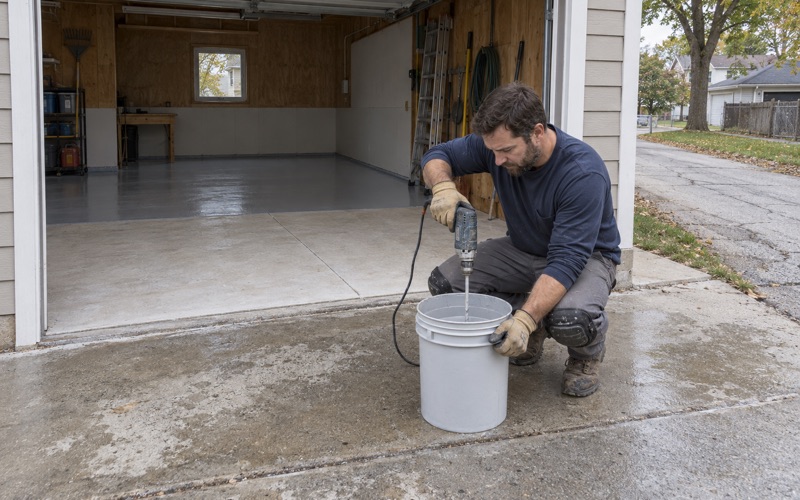
A worker mixing epoxy in a bucket on the apron of a detached Oak Park garage, the ground slab behind him half primed.

Epoxy Garage Floor

Ground, tested and salt-ready epoxy garage floors for Oak Park's detached alley garages and attached garages alike.

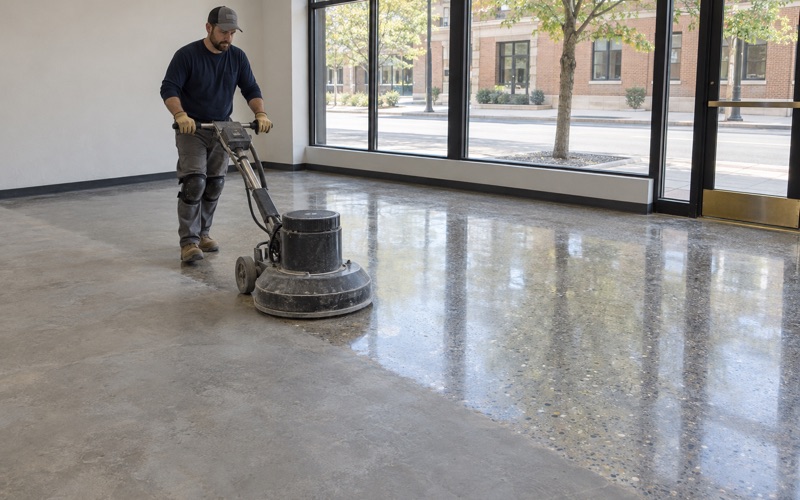
A burnisher crossing a polished concrete floor in an empty Oak Park storefront, the finished half reflecting the front windows.

Polished Concrete Floors

Ground, densified and polished concrete floors for Oak Park basements, storefronts, showrooms and shop spaces.

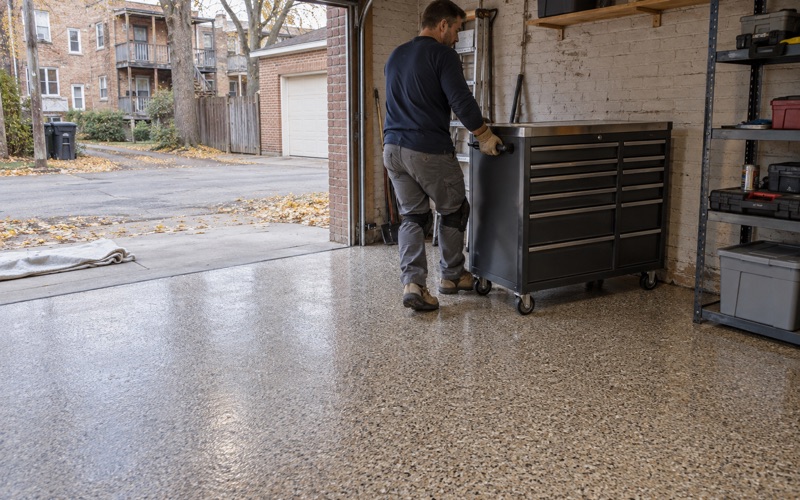
A tool chest rolled back onto a same-day polyaspartic flake floor in a detached Oak Park garage on a cold autumn afternoon.

Polyaspartic Floor Coating

Fast-curing, color-stable polyaspartic floor coatings for Oak Park garages, storefronts and floors that cannot sit out of service.

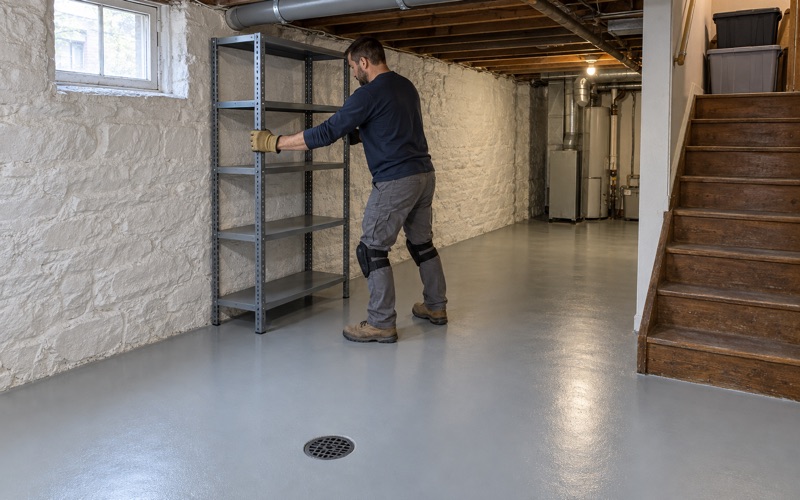
A new light gray epoxy floor in an Oak Park basement, a steel shelving unit being slid back beside the floor drain.

Basement Floor Epoxy

Moisture-tested basement floor epoxy for Oak Park's older homes, with old paint and adhesive removed before anything is coated.

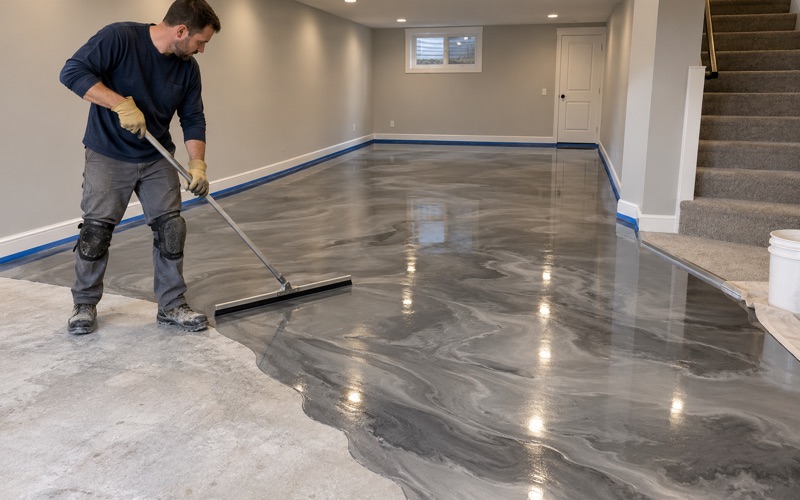
A pewter and silver metallic epoxy pour being squeegeed across a basement recreation room floor in Oak Park.

Metallic Epoxy Floor

Marbled metallic epoxy floors for Oak Park basements, showrooms, salons and garages, built on a flattened, ground slab.

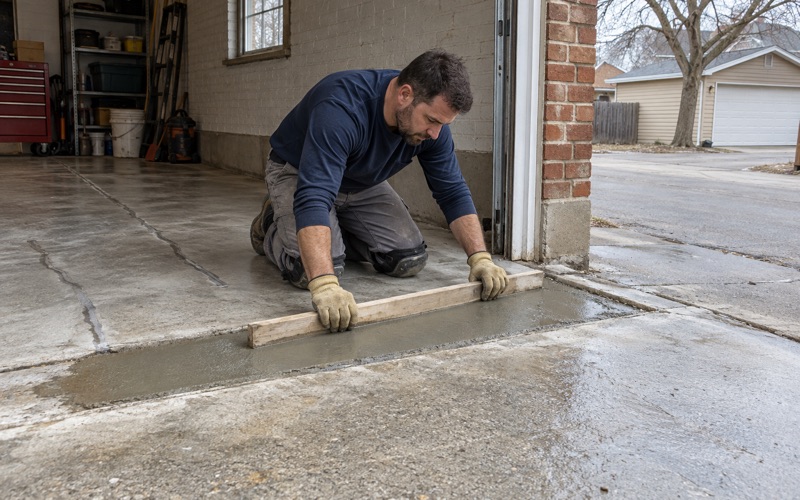
A spalled garage door threshold in Oak Park being rebuilt with repair mortar, screeded level with the sound slab on both sides.

Concrete Floor Repair

Crack, spall and scaling repair for Oak Park garage, basement and commercial slabs, with a straight answer when a slab needs replacing.

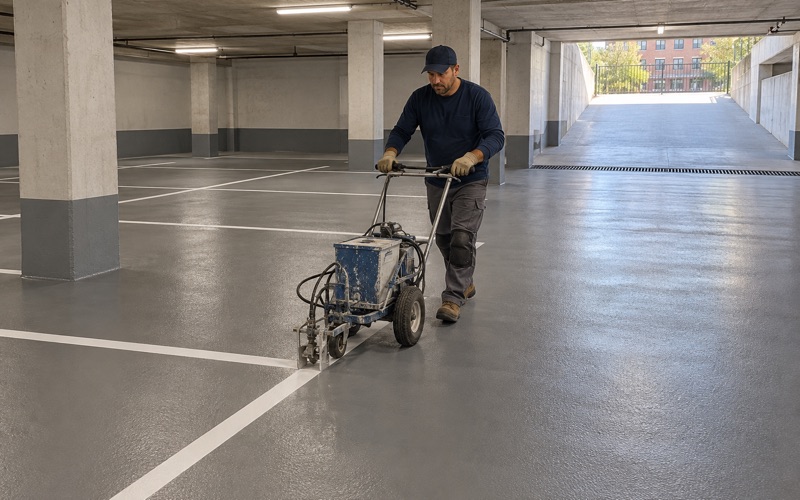
Parking stall lines being laid on a new gray coating in an apartment building's basement garage in Oak Park.

Commercial Epoxy Flooring

Resin floors for Oak Park clinics, shops, storefronts, schools and warehouses, scheduled around the hours a building has to stay open.

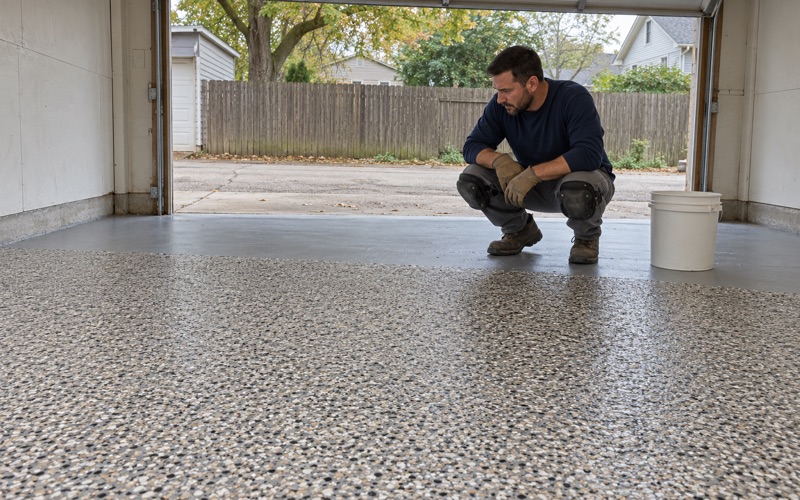
A dense gray, tan and black flake floor just broadcast in a detached Oak Park garage, the installer inspecting coverage at the edge.

Flake Epoxy Floor

Full and partial broadcast vinyl flake epoxy floors for Oak Park garages, basements, shops and commercial spaces.

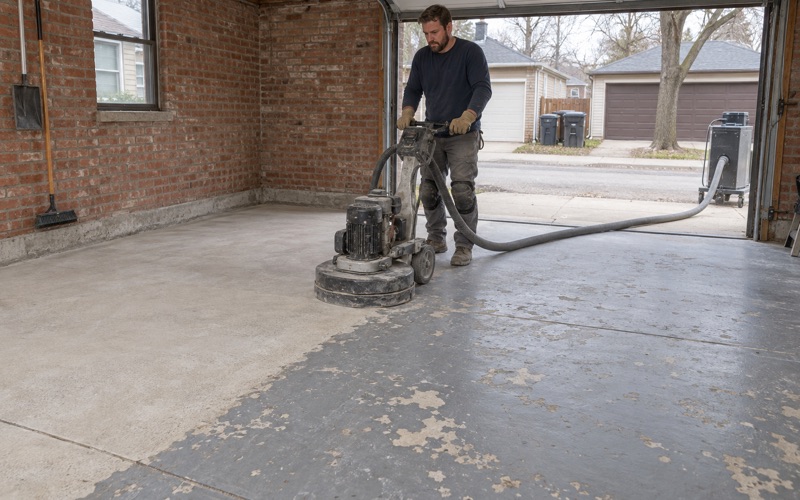
A walk-behind planetary grinder opening an old painted garage slab in Oak Park, its dust hose running to an extractor.

Concrete Grinding

Diamond grinding and shot blasting for Oak Park slabs: coating removal, mastic removal, leveling and surface profiling before a new floor.

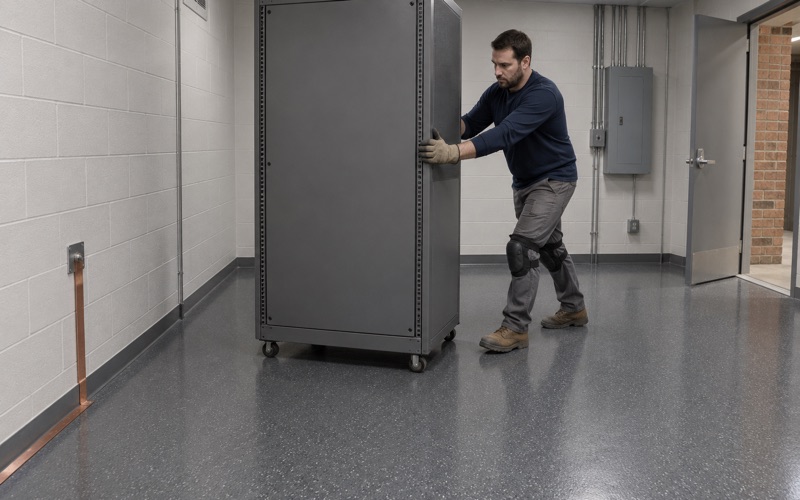
A dark gray static-dissipative floor in an Oak Park equipment room, its copper grounding strip ending at a wall ground plate.

Esd Flooring

Static-dissipative and conductive epoxy floors for electronics work, server rooms, labs and imaging spaces, tested against the required range.

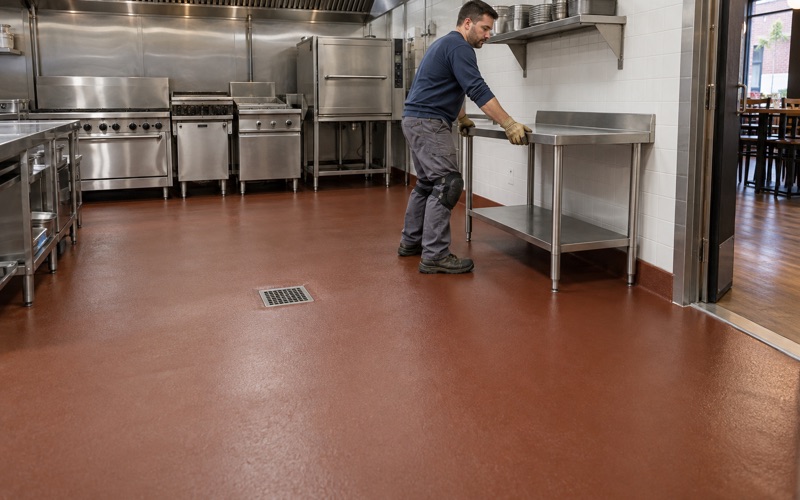
A restaurant kitchen in Oak Park with a new red-brown urethane cement floor, coved base and floor drain, a worktable eased back.

Commercial Kitchen Flooring

Urethane cement and resin kitchen floors with integral coved bases for Oak Park restaurants, cafeterias and food businesses.

Two Decades on Oak Park Concrete

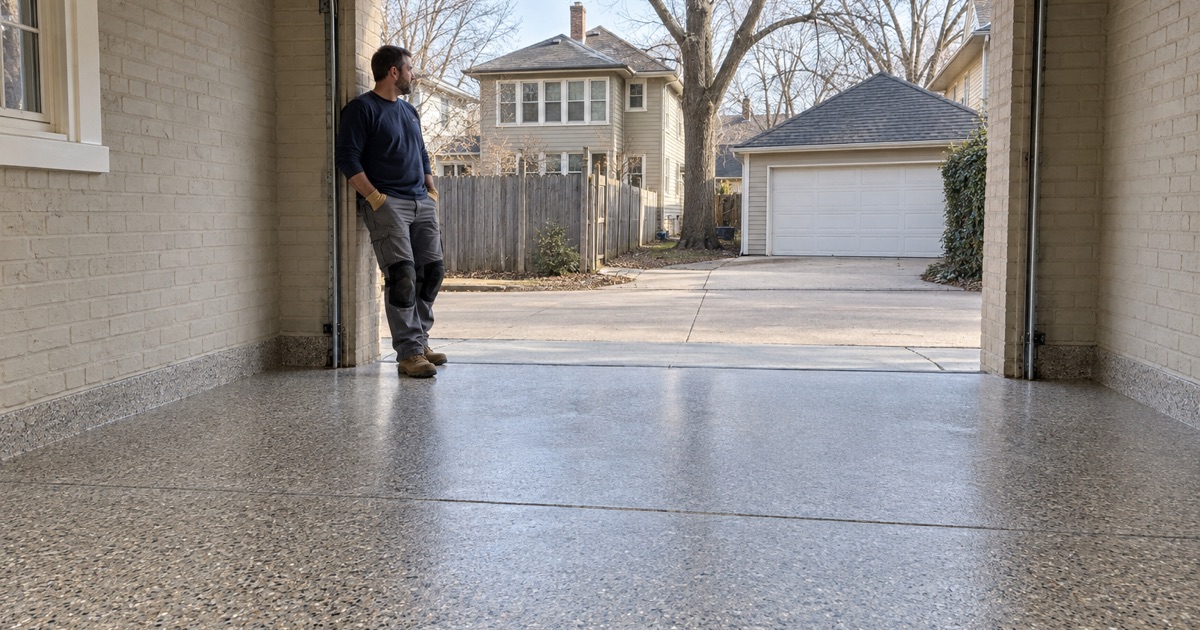
A finished gray and tan flake floor in a detached Oak Park garage with a coach house above, opening onto a concrete alley.

20+ Years of Epoxy Flooring Work

We have been grinding, repairing and coating concrete floors for more than twenty years, long enough to see which systems hold up through a Cook County winter and which ones peel by the second spring. That experience is the reason our quotes start with the slab rather than with a color chart.

Why Choose Oak Park Epoxy Flooring

Mechanical Grinding, No Acid Etch

Every slab we coat is opened with a diamond grinder or shot blaster to a measured surface profile, so the epoxy keys into clean concrete. Acid etching leaves residue and an uneven profile, which is how a kit floor starts peeling at the tire lines rather than lasting.

Moisture Testing in the Scope

No basement or garage floor gets coated before we test it, because vapor coming up through the slab is the leading reason a coating blisters. The test is a line item in the proposal rather than something sold after the floor has already failed.

Cures Timed to Dew Point

Never do we schedule an epoxy garage floor by the calendar alone; we read the slab temperature and the dew point spread at the surface first. A detached alley garage in Oak Park sits unheated all winter, so some jobs wait for spring rather than curing badly in the cold.

Built for Brine and Rock Salt

Garage floors here take calcium chloride brine and rock salt off every tire from December to March. Our garage systems are built with a chemical-resistant topcoat and sealed edges for that exposure, so salt does not undercut the coating rather than being treated as an afterthought.

Paperwork Before the Grinder

Every home job gets a written contract and the state’s consumer-rights pamphlet before work begins, as the Illinois Home Repair and Remodeling Act requires. The warranty exclusions are read out at the same time, with moisture named first, so nothing in the fine print surprises you later.

The Garage Floor, Start to Finish

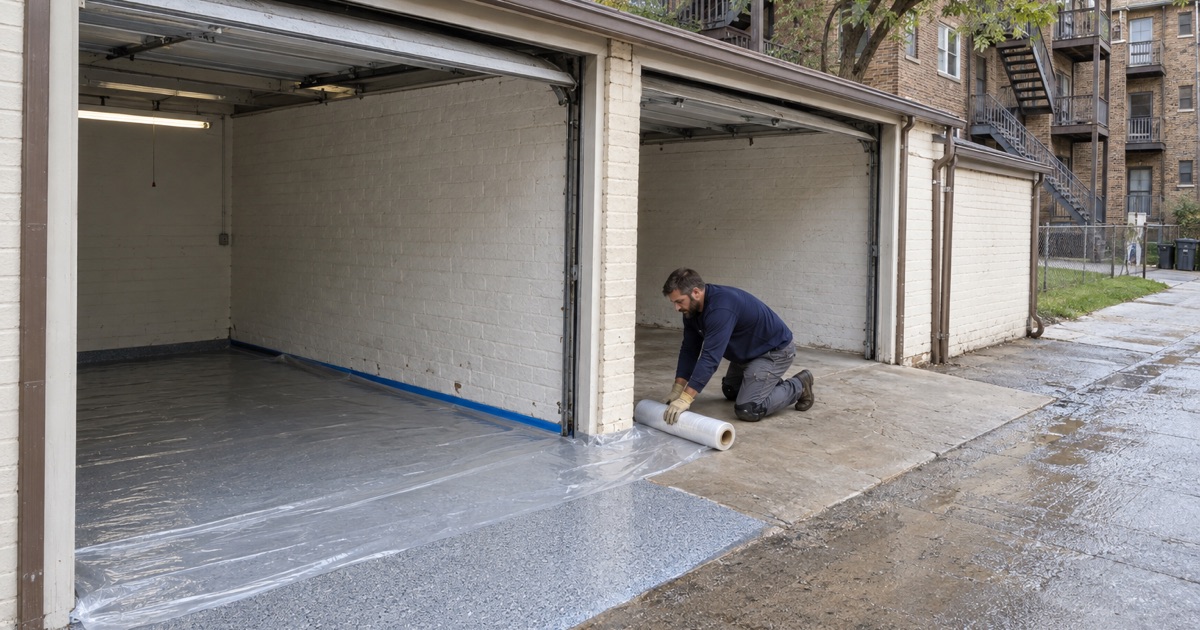
A row of garage stalls behind an Oak Park brick condominium building, one stall finished and the next masked off for its turn.

The Epoxy Garage Floor Job, From First Look to First Park

A garage floor job starts with a visit to read the slab, test it and measure it, then a written proposal. On install days we grind, repair cracks, apply the base coat, broadcast flake if the system calls for it and finish with a topcoat, then the floor cures before your car returns.

Staging Detached Alley Garages From the Alley

Most Oak Park garages are separate buildings that open onto an alley, and we stage the grinder, vacuum and material from that side. Grinding dust is collected at the machine and bagged, never swept or washed toward the alley drain, and we keep the alley passable for neighbors while we work.

Condominium Garages and Storage Rooms

In a condominium building the garage floor is usually common property, so the association or its manager has to approve the work, the schedule and the products. We provide the scope, the product data sheets and the cure times the board needs, and we plan around residents who still have to park.

Diamond Grinding a Sealed or Painted Garage Slab

A coating only bonds as well as the surface under it, and a garage floor that was sealed, painted or coated before gives a new epoxy nothing to grip. We diamond grind through those layers to an ICRI concrete surface profile the product calls for, which is the step a peeling floor almost always skipped.

Moisture Testing an Older Garage Slab

The residential code has long let garage floors go in without a vapor retarder under them, and many older detached garages here were poured that way. We test with a calcium chloride kit to ASTM F1869 or relative humidity probes to ASTM F2170 before choosing a system, because vapor from below lifts coatings.

Reading Garage Floor Cracks Before Quoting

Hairline shrinkage cracks can be filled and coated over, but a crack that has opened, shifted or broken the slab into pieces is still moving. We map the cracks before quoting and tell you plainly when a section of slab needs to be replaced first rather than hidden under a coating that will crack with it.

Calcium Chloride Brine and Rock Salt on Bare Concrete

The brine and rock salt that keep roads clear come into the garage on the tires and soak into bare concrete each freeze-thaw cycle. Over winters that scales and pits the surface, which is a large part of why Oak Park homeowners coat garage floors in the first place.

Coating a Garage in a Cook County Winter

Epoxy needs a minimum slab temperature to cure, and an unheated detached garage can sit below it for weeks between late fall and spring. We measure the slab rather than the air, and when the numbers do not work we say the job waits for warmer weather instead of risking a soft, cloudy floor.

Hot Tire Pickup on Thin Garage Coatings

A tire coming off a warm drive can soften a thin or poorly cured coating and pull it up when the car is parked, leaving bare patches in the tire lines. A full-thickness 100% solids epoxy base with a polyaspartic or urethane topcoat resists that far better than a one-coat paint-grade product.

Epoxy Garage Floor Kits Versus a Professional System

A retail kit usually means an acid etch, a thin water-based coat and a few decorative chips. A professional system grinds the slab, uses a thicker solids-rich base, builds a full or partial flake broadcast and seals it with a durable topcoat, which is the difference between a floor that lasts and one that peels.

What Drives the Cost of an Epoxy Garage Floor

The price follows the square footage, the repair the slab needs, any old coating that has to come off and the system you choose. A full flake broadcast with a polyaspartic topcoat costs more than a solid color coat, and a slab with wide cracks or spalling adds repair time before any coating starts.

Garage Coating Warranty Exclusions, Moisture First

Almost every garage coating warranty excludes failures caused by moisture vapor from below the slab, and most exclude damage from impacts and chemicals left standing. We read those exclusions to you before the sale, and our moisture testing is how we keep the most common one from becoming your problem.

Old-House Basements and the Water Under Them

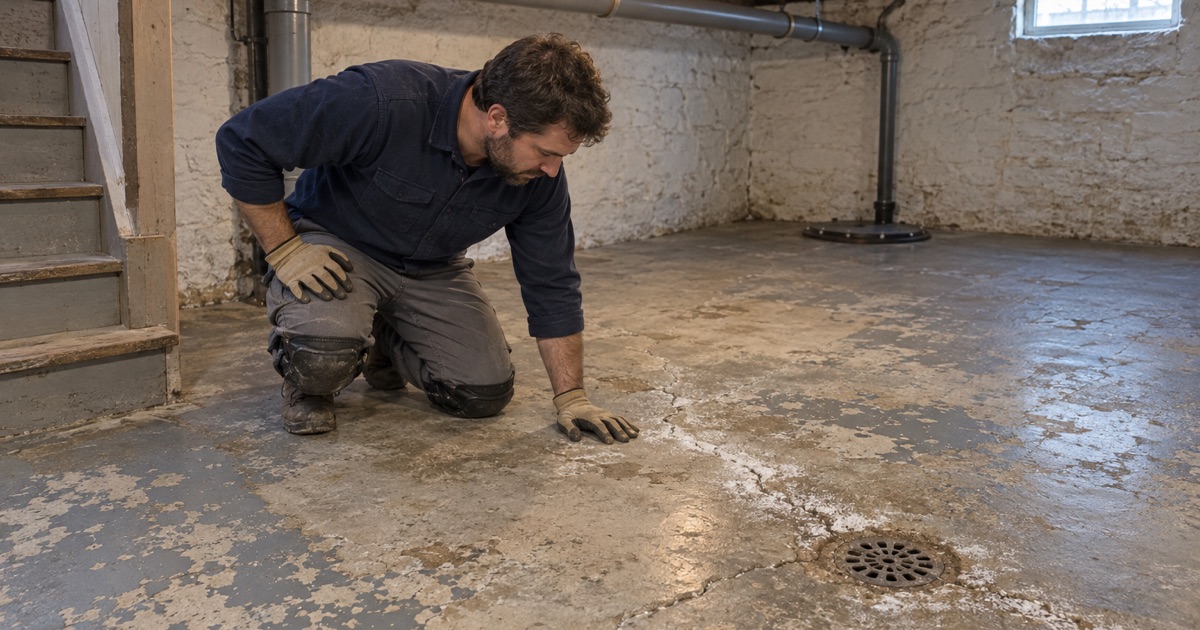
An old Oak Park basement floor with flaking paint and efflorescence along a crack to the floor drain, overhead sewer piping above.

Coating a Basement Floor After a Moisture Test

A basement floor coating starts with a moisture question, because the slab sits in damp soil with no sunlight to dry it. We run a plastic sheet test to ASTM D4263 as a first look and quantitative tests where the result is close, then choose a system that matches what the slab is actually doing.

Paint, Patches and Old Adhesive on Century-Old Basement Slabs

Many Oak Park houses were built before 1940, and their basement floors carry decades of paint, patching compound, tile adhesive and sealers. We test and grind those layers off before choosing a coating, because a new epoxy over an old, loose layer fails when that old layer lets go.

Combined Sewers and Water Rising Through a Floor Drain

Oak Park’s sewers carry stormwater and sewage in the same pipes, and a heavy storm can surcharge them until water rises through a basement floor drain. That is a plumbing problem, not a floor problem, and a coating does nothing to stop it, so we point to the drain and the backflow question first.

Coating a Basement Floor After a Sewer Backup

After a backup, the slab has to be cleaned, disinfected and given time to dry before any coating goes down, and the cause of the backup should be addressed first. We test moisture again after the cleanup, because a floor coated over a wet slab will blister and trap contamination underneath.

Overhead Sewers, Backflow Valves and the Village Cost Share

An overhead sewer or a backflow valve keeps sewer water from coming up through the floor drain, and the village pays half of that cost, up to $5,000. We recommend sorting that out before a basement floor is coated, because a coating sitting under a drain that still backs up is money spent in the wrong order.

Efflorescence on a Basement Floor

The white, chalky powder on many basement floors is efflorescence, mineral salt left behind when water moves through the concrete and evaporates. It tells us moisture is passing through the slab, so we treat it as a test result, grind it off and plan the coating system around it rather than covering it.

Moisture-Mitigation Primers for Damp Basement Slabs

When a basement slab tests above what a standard epoxy tolerates, a moisture-mitigation primer can go down first to hold back vapor beneath the coating. It is a specific product with its own limits, and we name it in the proposal so you know whether your floor is getting one and why.

Laundry Rooms, Workshops and Home Gyms on a Coated Slab

A basement laundry room needs a seamless coat that wipes clean and turns water, a workshop needs a floor that shrugs off dropped tools, and a home gym needs room for rubber mats over the coating. We set texture, thickness and topcoat for the room’s use rather than coating the whole basement one way.

What Drives the Cost of a Basement Floor Coating

Basement pricing turns on how much old paint and adhesive has to come off, whether the slab needs a moisture-mitigation primer, how many cracks need repair and the system you choose. Stairs, tight access and furniture moving add labor, which is why we price after seeing the basement.

Radon and Why a Floor Coating Is Not Mitigation

A coated floor can seal some cracks, but it is not radon mitigation and we never sell it as one. In Illinois radon mitigation is licensed by the Illinois Emergency Management Agency, so if a test shows elevated radon we point you to a licensed mitigator before the floor work.

Color, Flake and Finish

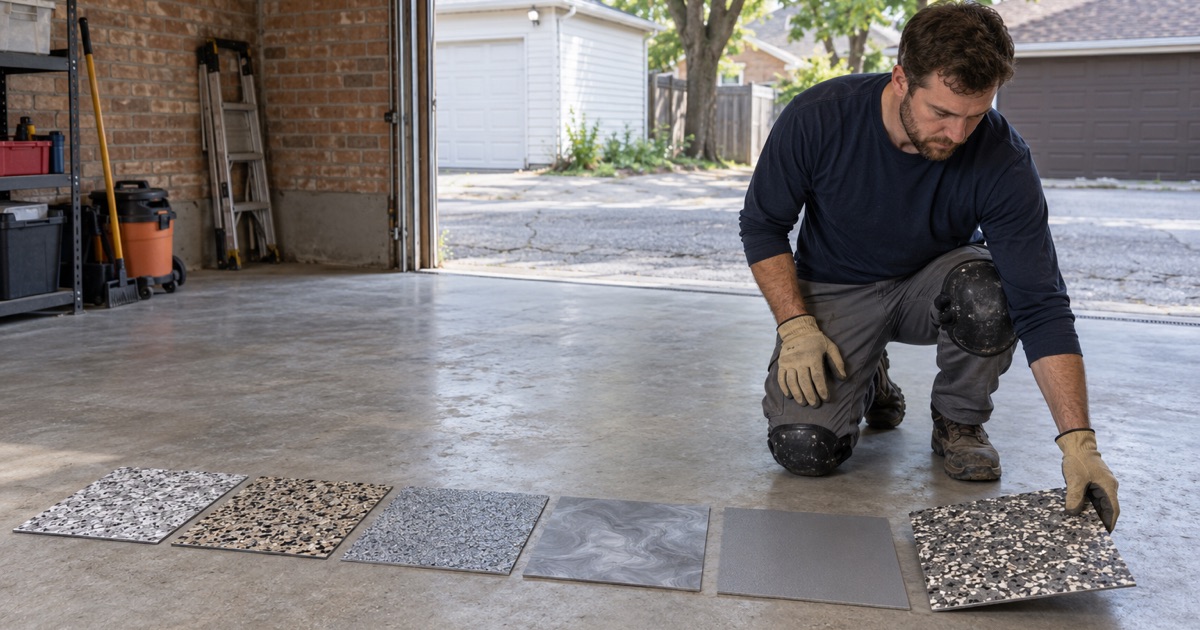
Square flake, quartz, metallic and solid-color sample tiles laid in a row on a bare garage slab in Oak Park.

Vinyl Flake Blends and Chip Size

Vinyl flake is broadcast into wet epoxy, and both the blend of colors and the chip size change how the floor reads. Larger chips give a bold speckle that hides dirt well, smaller chips read closer to a granite look, and a full broadcast covers the base coat completely for the most texture and depth.

Metallic Epoxy and the Marbled Finish

Metallic epoxy floors carry metallic pigment that the installer moves while the resin is wet, creating a marbled, three-dimensional look. No two are alike, and the result depends on a flat, well-ground slab and a steady hand, so we show finished samples and talk through how much movement you want first.

Polished Concrete and Aggregate Exposure

Polished concrete is the slab itself, ground through progressively finer diamonds and hardened with a lithium silicate densifier. How deep we grind decides how much stone shows, from a cream finish that keeps the surface paste to a full aggregate exposure that shows the stone mix across the floor.

Gloss, Satin and Matte Topcoats

High gloss looks deep and bright but shows dust, footprints and tire marks quickly. Satin and matte topcoats hide everyday dirt and scuffs better and read calmer in a living space, so we match the sheen to how the floor will be used and cleaned.

Quartz Broadcast Floors for Color and Grip

Colored quartz aggregate is broadcast into epoxy and locked in with a clear topcoat, building color and slip resistance in the same layers. It is a common choice for commercial kitchens, locker rooms and wet entries, where a floor needs texture that will not wear away.

Solid Color Epoxy Coatings

A solid color coat with no flake is the simplest system and often the right one for a workshop, utility room or warehouse aisle. It is easy to clean and easy to mark with safety lines, and it keeps the cost down where a decorative finish adds nothing.

Ultraviolet Light and Ambering

Standard epoxy yellows, or ambers, when sunlight reaches it through an open garage door or a window. We finish floors that see daylight with an ultraviolet-stable polyaspartic or urethane topcoat so the color stays true rather than turning yellow along the doorway.

Saw-Cut Lines, Borders and Inlaid Logos

Saw-cut lines can divide a floor into tiles or panels, and taped borders can frame a showroom, a gym or a lobby. Logos and lettering can be inlaid between coats, and we lay out the design on the slab before any color goes down so you see it first.

Clinics, Kitchens, Storefronts and Shop Floors

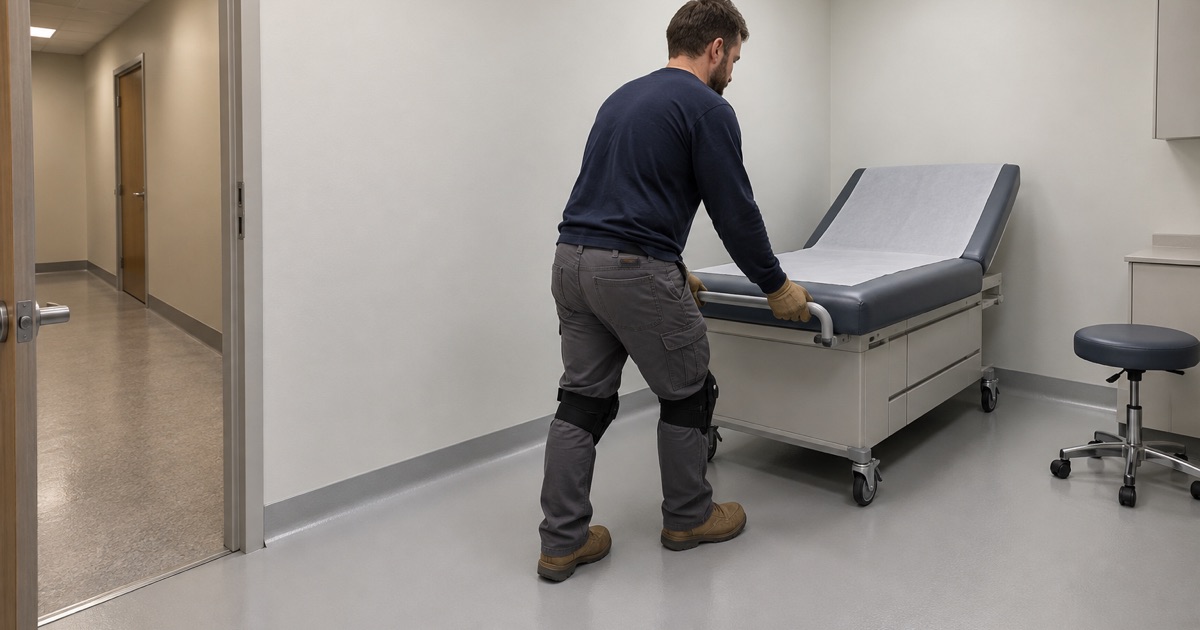
A storefront clinic exam room in Oak Park with a new seamless gray floor and coved base, an exam table being wheeled back in.

How a Commercial Epoxy Floor Job Differs

A commercial floor carries more traffic, more chemicals and more rules than a home floor, and the building usually has to keep operating around the work. We plan the system, the phasing and the cure times with the owner or facility manager, and the proposal spells out each one.

Hospital and Clinic Floors That Cannot Close for Long

A clinic or treatment room floor needs a seamless, cleanable surface that stands up to disinfectants and rolling equipment. We phase the work room by room and use fast-cure systems where the schedule is tight, so a practice can keep seeing patients while its floors are redone.

Restaurant Kitchen Floors and Oak Park Health Plan Review

Food businesses in Oak Park answer to the village’s own Oak Park Public Health Department, which reviews construction plans for new and remodeled kitchens. We coordinate with your plans and confirm the floor and cove details with the department rather than assuming another county’s rules apply.

Coved Bases and Urethane Cement for Hot Washdown

Commercial kitchen floors see hot water, grease and steam cleaning that can soften a standard epoxy. Urethane cement tolerates that heat and thermal shock, and a coved base that runs up the wall makes the floor-to-wall joint seamless and cleanable, as the FDA Food Code calls for.

Storefront and Tenant Space Floors Between Leases

A retail or office space turning over between tenants often has days, not weeks, to get a new floor. We remove the old finish, grind and coat on a fixed schedule, and choose a fast-cure system when the next tenant’s move-in date leaves no room to wait.

Auto Repair Bays With Oil, Coolant and Lifts

An auto repair bay floor takes oil, coolant, brake fluid and dropped tools every day, plus the anchors of vehicle lifts. We specify a chemical-resistant system with texture where it is needed and work around lift bases and trench drains so the floor stays sealed at those edges.

Static-Dissipative and ESD Floors

Electronics assembly, server rooms and some labs need a floor that drains static charge to ground within a set resistance range. Static-dissipative and ESD epoxy systems use conductive primers and grounding points, and we test the finished floor against the range the space requires.

School, Church and Public Building Floors on a Summer Schedule

Schools and public buildings usually have one long window each year, and church halls have their own calendars. We plan grinding and coating in those breaks, with fast-cure systems where the gap is short, so floors are ready when people return.

Illinois VOC Limits on Floor Coatings

The Chicago area is an ozone nonattainment area, and Illinois limits the volatile organic compound content of architectural and industrial floor coatings under 35 Ill. Adm. Code Part 223. Those limits bind the contractor who applies the coating as well as the manufacturer, so we choose products that comply.

Overnight and Weekend Floor Work Around a Running Building

Restaurants, clinics and storefronts often cannot close during the day, so we work overnight and on weekends. We set up dust control, ventilation and barriers so the space opens on schedule, and we put the work windows and cure times in writing before we begin.

Areas We Serve

Oak Park Epoxy Flooring provides epoxy-flooring throughout the greater Oak Park area, with the same crews and the same standards on every job.

Good to know

Frequently Asked Questions

How much does an epoxy floor cost in the Oak Park area?

Angi's published range for concrete coating in the Chicago suburbs runs from $3 to $15 per square foot, and that spread is real. Where a floor lands depends on the condition of the slab, the repair it needs, the system build and the number of coats, so we price after seeing the floor rather than over the phone.

How long does a garage floor coating take from start to finish?

Most two-car garages are ground, repaired and coated over a short run of working days, then left to cure before a car goes back in. Cure time is set by the product and by the slab temperature, so a cold slab stretches the schedule and we tell you that before the work starts rather than on the last day.

Do I need a village permit to coat a floor in Oak Park?

The village's 2024 building code amendment exempts floor surface treatments and similar finish work when no electrical, plumbing, mechanical or structural work goes with it. Slab replacement or a plumbing change needs a permit, and a landmark or historic-district property needs advisory review even for exempt items.

Is your company licensed by the state for flooring work?

Illinois does not issue a state license for flooring or coatings work, so there is no state number for any floor contractor to show you. What applies instead is each village's own contractor registration, which we confirm before a job is scheduled, and the Home Repair and Remodeling Act on residential jobs.

What is the difference between epoxy and polyaspartic?

Epoxy is a thick, hard-wearing body coat with a long working time, and it is the usual base for flake and metallic floors. Polyaspartic cures much faster, resists sunlight better and is often used as the topcoat over an epoxy base, so many of our garage floors use both rather than choosing one.

Will an epoxy floor be slippery when it is wet?

A smooth high-gloss coat can be slick under water, slush or oil, which matters in a garage and a kitchen. We add texture through the flake or quartz broadcast or a grit additive in the topcoat, and we set the amount of texture against how the floor will be cleaned and what rolls across it.

Can you coat over the paint or epoxy already on my floor?

Usually not without grinding it first, because a new coating can only hold as well as the old layer under it holds to the concrete. We test what is there, and where an old coating is peeling, flaking or soft we take it off so the new system bonds to clean, opened concrete.

How soon can I drive on a newly coated garage floor?

Foot traffic usually comes back well before car traffic, and the gap between them depends on the products in the system and the slab temperature during the cure. We give you a written return-to-service date for both, and in a cold detached garage that date moves later rather than being guessed.

Do you put the warranty terms in writing?

Yes, and we go through the exclusions with you before the job is sold rather than after something fails. Moisture coming up through the slab is the first exclusion on almost every coating warranty, which is the reason we test for it before we quote.

Do you work on commercial floors outside normal business hours?

Yes. Clinics, restaurants, schools and storefronts often cannot close during the day, so we plan grinding, coating and cure around the hours the building has to stay open, including overnight and weekend windows, and we put that schedule in the proposal.

Ready to Get Started?

Request a free quote today and we'll get back to you fast.